Newborn Sleep 101: Everything New Parents Need to Know for Better Nights
Mar 25, 2026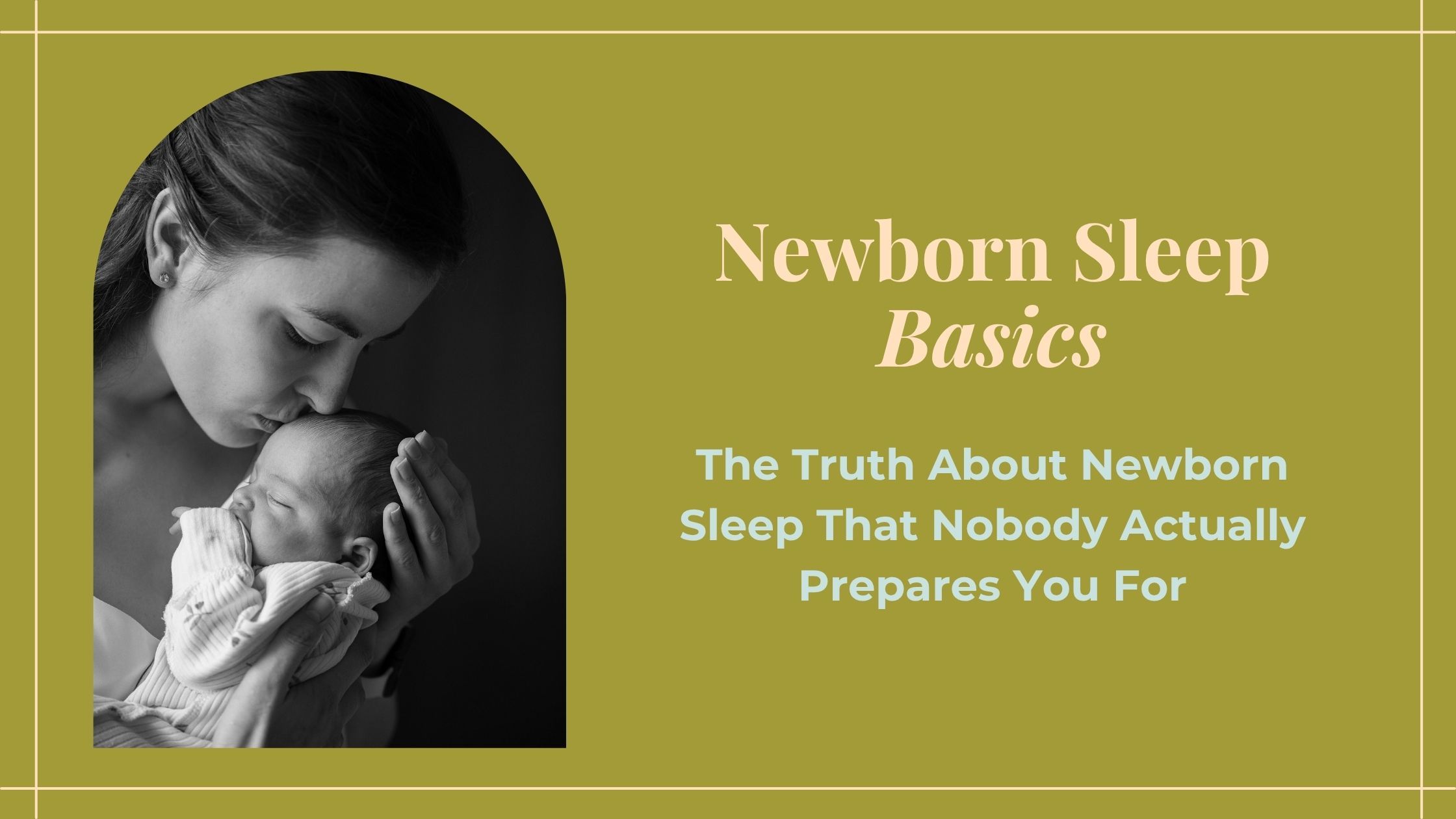
If you're a new parent taking shifts with your partner while holding your baby at 2am because they will not sleep anywhere but on you… first of all, you are not alone. Newborn sleep is one of the most talked about, most googled, and most misunderstood parts of early parenthood. And with so much conflicting advice out there, it's easy to feel more confused than when you started.
Here's what I want you to know before we dive in: you are not doing it wrong. Newborn sleep is genuinely hard – not because you're missing something, but because newborns are biologically designed to sleep the way they do. Understanding why makes all the difference.
So let's talk about it. All of it. The real stuff – so you can stop second-guessing yourself and start feeling confident.
What Does Newborn Sleep Actually Look Like?
Newborns sleep a lot: somewhere between 14 and 17 hours a day. But before you think that sounds like a dream, here's the catch: that sleep is spread across 24 hours in short stretches at a time.
Why? Because newborns have tiny stomachs that need to be refilled frequently. Sleep and feeding are deeply connected in these early weeks, and that is completely, developmentally normal. Knowing this going in won't make the 3am wake-ups easier exactly… but it will make them feel a whole lot less alarming.
Understanding Newborn Sleep Cycles
Here's something that surprises a lot of new parents: newborns have much shorter sleep cycles than adults (around 40-60 minutes each). And within those cycles, they cycle between two stages:
- Active sleep: similar to REM sleep in adults, where your baby may move, make noises, flutter their eyes, or even seem like they're waking up
- Quiet sleep: deeper, calmer, more still
As adults, we're not really used to seeing much active sleep. It can look like grunting, "barn animal" sounds, moving around, and even crying. So many parents rush in to soothe their baby, only to accidentally wake them in the process. One of the most helpful things you can do in the newborn stage? Pause (just for a second) before you respond to see if they're actually waking or just in active sleep. You might be surprised how often they settle right back down.
Why Your Baby Has Day and Night Mixed Up
If your newborn seems to think that 2am is party time and noon is for sleeping… you are not imagining it. Day and night confusion is incredibly common in the early weeks, and there's a simple reason for it.
Newborns haven't yet developed their circadian rhythm (the internal body clock that regulates when we feel awake and when we feel sleepy). This develops somewhere between 3-5 months (aka the 4 Month Sleep Regression), but you can still support that development.
During the day:
- Open all the shades and let natural light flood in
- Keep feeds and interactions engaging and interactive
- Don't worry about noise levels or darkness for naps – let life happen around them
At night:
- Keep things calm, quiet, and dimly lit
- Feed, change, and straight back to sleep with minimal stimulation
This won't fix overnight sleep immediately, but it starts to teach your baby the difference between day and night.
Creating a Sleep-Friendly Environment for Your Newborn
Your baby’s sleep environment can make a genuine difference in how well your newborn settles and stays asleep. Here's what actually helps:
- White Noise - White noise mimics the sounds your baby heard in the womb – which, fun fact, was actually quite loud in there. A white noise machine running consistently through sleep can help your baby settle more easily and stay asleep through household sounds. Bonus: this can become a sleep association we can lean on later to signal to your baby’s body that it’s time for sleep.
- Room Temperature - Aim for a room that feels comfortable to you (not too hot, not too cold). Overheating is a risk factor for SIDS, so when in doubt, keep it slightly cooler and use appropriate sleep layers.
- Dim Lighting - During nighttime feeds and diaper changes, keep the lights as low as possible. Bright light signals to your baby's brain that it's time to be awake (and that's the last message you want to send at 3am). If you can, avoid blue light and use a red light if you need some extra light at night.
Safe Sleep: What Every New Parent Needs to Know
Safe sleep is one of the most important things you can learn as a new parent. The AAP recommends the following guidelines to reduce the risk of SIDS:
- Back to sleep – always place your baby on their back to sleep
- Firm, flat sleep surface – avoid soft surfaces, pillows, or loose bedding
- Bare sleep space – a fitted sheet only, nothing else in the crib or bassinet
- Room-sharing for the first 6 months – keep your baby in their own sleep space in your room
- Smoke-free environment – avoid any smoking around your baby
If you're practicing contact naps or considering bedsharing, my Newborn Sleep Guide covers safe sleep in depth – including how to make informed decisions that work for your family.
Learning to Read Your Baby's Sleep Cues
One of the most powerful skills you can develop as a new parent is learning to recognize when your baby is tired before they hit the overtired/dysregulated stage. A dysregulated baby needs to come down to their calm baseline for sleep to unfold, so catching those early cues can be really helpful.
Early tired cues to watch for:
- Staring off into space or going glassy-eyed
- Red eyebrows
- Hiccups
- Yawning
- Rubbing their eyes
Late tired cues (you may need to slow down and focus on regulation before sleep):
- Increasing fussiness
- Crying
- Arching their back
The more you observe your baby, the more natural this becomes. You will become fluent in their language faster than you think.
Starting a Simple Bedtime Routine
It's never too early to start a simple, consistent bedtime routine (even in the newborn stage). You don't need anything elaborate. What matters is consistency and doing the same steps in the same order each time.
A simple newborn bedtime routine might look like:
- Dim the lights
- Diaper change and into pj’s
- White noise on
- Feed
- Gentle rocking or swaying
Over time, your baby's brain will begin to associate these steps with sleep – and that predictability becomes incredibly powerful as they grow.
Be Gentle With Yourself
Here's something I really want you to hear: there is no perfect way to do this.
Every baby is different. What works beautifully for one family might not work at all for another. And the fact that you're here, reading this, trying to understand your baby's sleep better – that already makes you a wonderful parent.
I need you to hear this:
- There are NO BAD HABITS.
- You are not creating a ‘rod in your back’ by feeding to sleep.
- You can do what’s easy now and change it when it becomes unsustainable.
- You don’t need perfection or your baby falling asleep on their own for them to sleep well at night
The newborn stage is hard. It is also temporary. And you are doing so much better than you think.
Give yourself grace on the hard days. Celebrate the small wins. And please, ask for help when you need it. You do not have to figure this all out alone.
Ready to Go Deeper? The Newborn Sleep Guide Has You Covered
If you want a comprehensive, judgment-free guide to newborn sleep that goes beyond the basics – my Newborn Sleep Guide is exactly what you need.
It's your complete guide to baby sleep from 0 to 16 weeks, and inside you'll learn:
- What newborn sleep really looks like – so you can stop second-guessing everything
- How to create safe sleep spaces, including contact naps and bedsharing
- Gentle ways to support sleep foundations without rigid schedules
- How to get more rest for both of you – without sleep training or complicated routines
You deserve to feel confident and prepared in those early weeks. The Newborn Sleep Guide is the resource I wish I'd had as a first-time mom, and it's designed to take the pressure off from day one.
👉 Grab the Newborn Sleep Guide and go into the newborn stage actually prepared.
Free Gentle Sleep Starter Kit
Ready to start getting better sleep this week? The Free Gentle Sleep Starter Kit is for you.
Inside you'll find:
- How to use wake windows (and how not to)
- How to find your baby's unique sleep needs
- 10 easy ways to get more sleep this week